Are Smarter People Asking Better Questions?
Some people seem to move through life with a kind of clarity the rest of us can't quite name. They don't always have more information. They don't always work harder. But somehow, they find the thread that matters. The rest of us pull at knots until our hands ache.
It's a question that stings a little, if you're honest. Because underneath it lives a fear — that maybe you've been asking the wrong things your whole life. That the confusion you carry isn't bad luck. That it's something about the way you're looking.
People ask this question when they feel stuck. When they've tried every angle on a problem and only made it worse. When someone else walks into the same room, glances at the same mess, and somehow sees a way through. It can feel like a gap in your wiring. But the Buddhist Sage suggests the gap might be somewhere else entirely — not in your intelligence, but in your grip.
The Buddhist tradition doesn't put much stock in the idea that sharper thinking gets you further. In fact, it often suggests the opposite. The mind that is always analyzing, always questioning, always reaching — that mind can become its own obstacle. There's a story at the heart of this guide's answer: a fisherman at dawn, working a stubborn knot in his net. He tries every angle. He pulls, adjusts, pulls again. The knot gets tighter. It's only when he stops — when exhaustion forces his hands still — that he sees what he's been doing wrong. He wasn't outsmarting the knot. He was fighting it. And the fighting was the problem.
This is a core idea in Buddhist thought: that clinging — to an outcome, to a method, to a need to be right — actually clouds the mind rather than sharpens it. The fisherman wasn't less intelligent when he was gripping. He was just less available. His hands were busy. His mind was locked onto one way of seeing. The moment he let go, not of the problem, but of the struggle with it, the answer became visible. It had been there the whole time. The Buddhist Sage would say: the question isn't whether you're smart enough. The question is whether you're still enough to see clearly.
The most powerful idea here is simple and a little unsettling: intelligence might not be about asking better questions at all. It might be about knowing when to stop asking — and just look.
Imagine a woman who has been trying to repair a friendship for months. She writes long messages, rehearses conversations, asks herself what she did wrong, what she should say next. The more she thinks, the more tangled it gets. Then one afternoon, she stops. Not because she gives up — but because she's tired. And in that quiet, she notices something she hadn't let herself see: she's been trying to fix the friendship for her own comfort, not for the other person. That stillness didn't make her smarter. It made her honest.
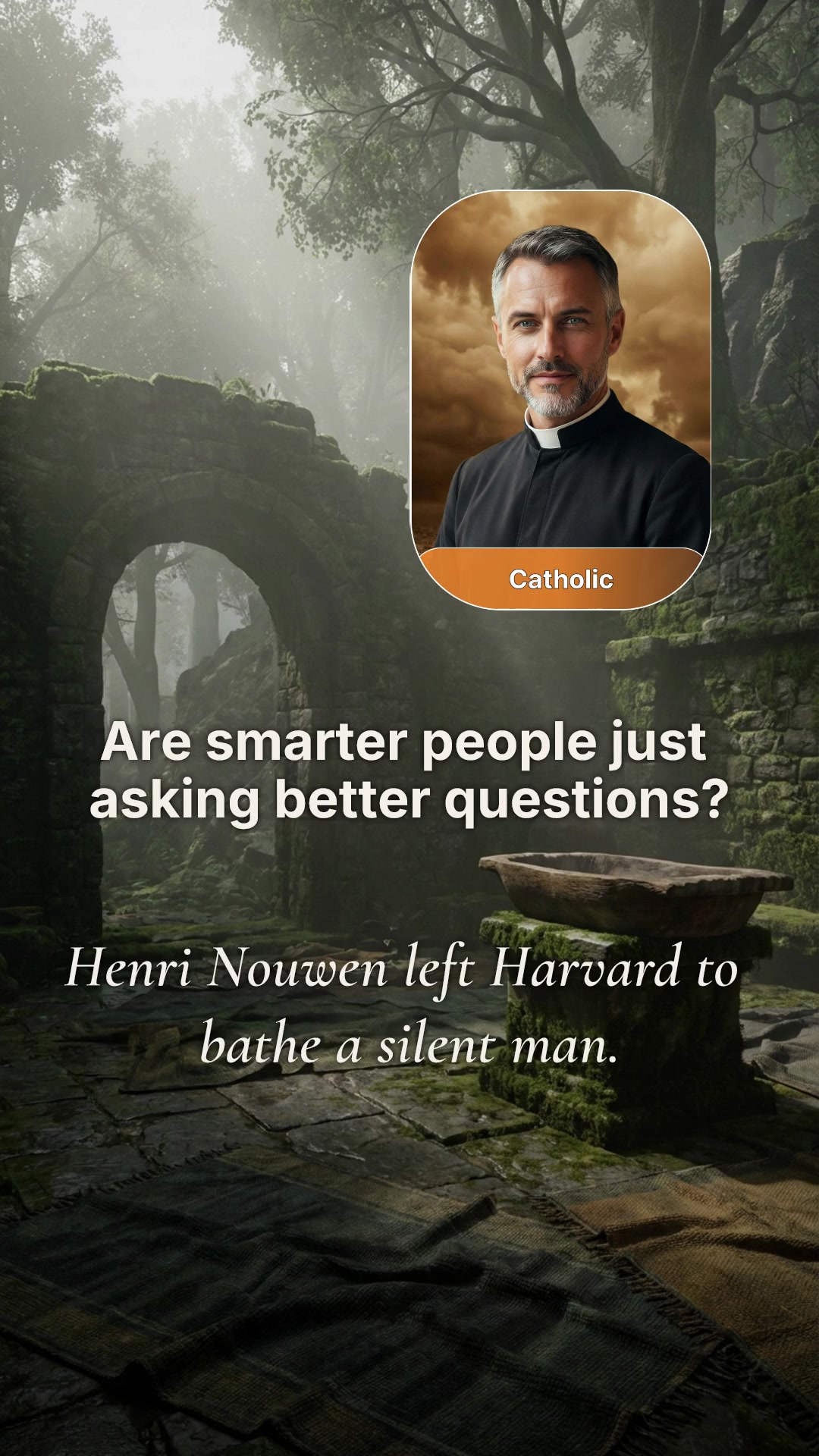
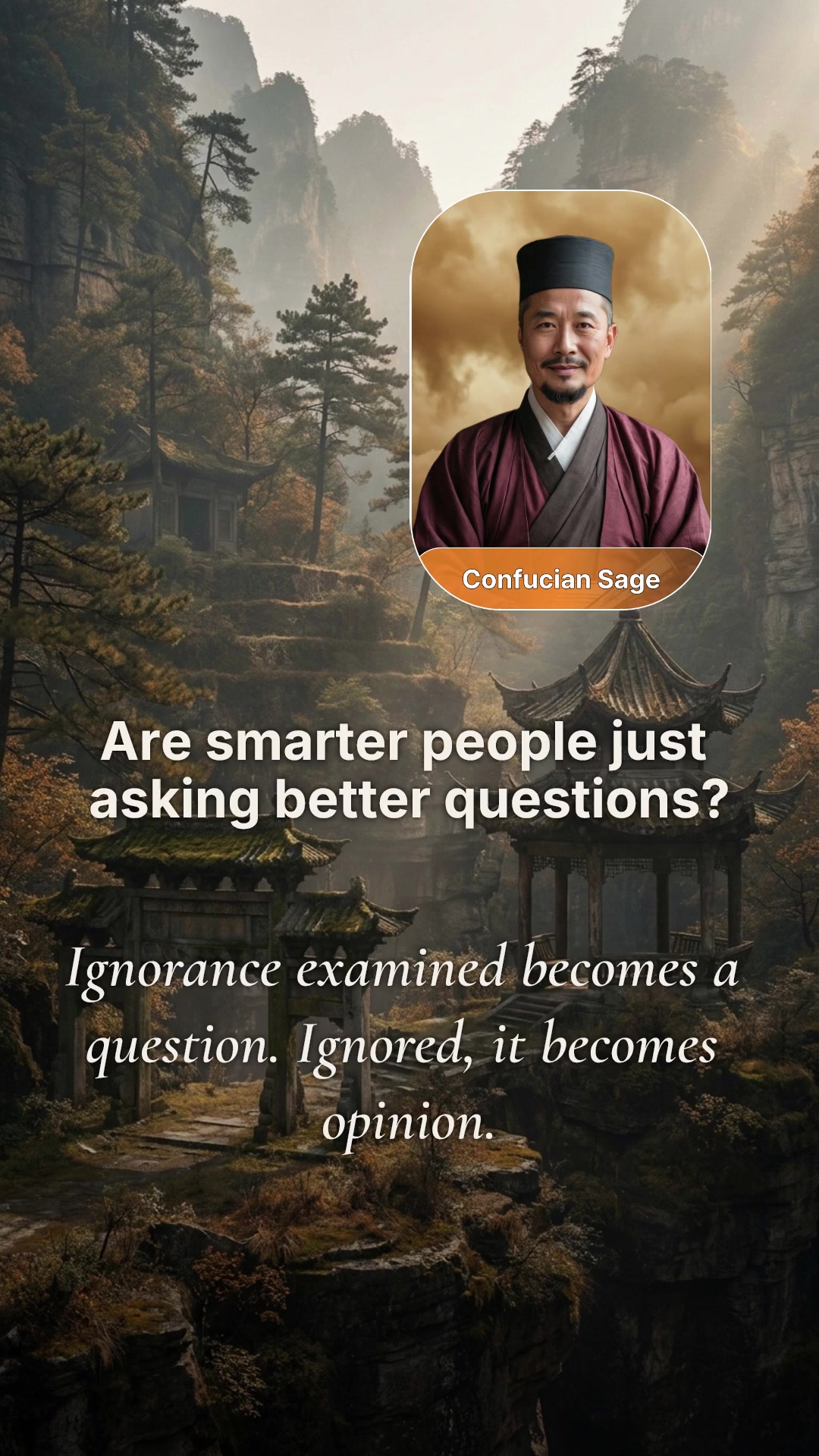
Other wisdom guides would take this question somewhere different. A Confucian Sage might say the quality of your questions reflects the quality of your character. A Rabbi might ask whether you're questioning in order to grow, or only to win. A Protestant guide might suggest that the wisest questions are the ones you bring to something larger than yourself. A Daoist Sage might smile and say the best question is the one you forget to ask. One question. Nine different paths.
Compare all nine answers and see which one speaks to you most.
One question. Nine perspectives
See how different AI guides answer the same question: “Are smarter people just asking better questions?”
Fresh reflections, thoughtful answers, and video insights from our guides — for moments when you need clarity, comfort, or perspective.